
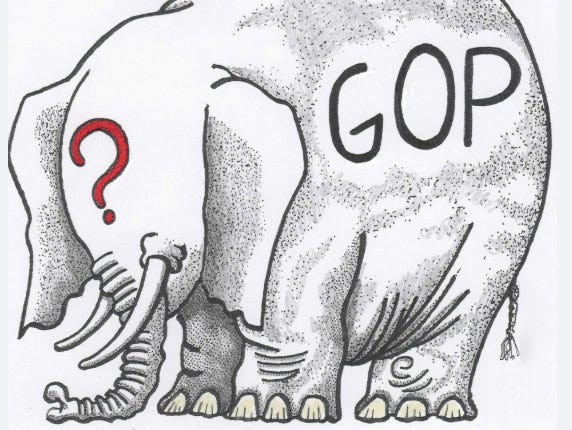
Between TRUMP/White House and Voters
1. GOP Stress Quantitative Index
Timeframe
- Reporting period: December 15, 2025 — January 14, 2026
- Publication date: January 15, 2026, 10:00 Europe/Amsterdam time
Purpose of the Monthly Reporting
This report monitors the evolving pressures on GOP representatives as they balance national party alignment with local constituency expectations. By combining quantitative stress indicators with real-world events, we provide a nuanced view of intra-party dynamics ahead of the 2026 midterms.
Methodology Overview
The analysis uses the GOP Representative Stress Index (RSI), a composite framework that quantifies political stress through observable behavioral and structural signals. The model integrates town hall dynamics, public confrontations, leadership defiance, and polling shifts into a monthly aggregate score for blue- and red-district representatives. [2]
- Key indicators: Town Hall Stress Index (THSI), Confrontation Index, Public Defection Statements, Retirement/Primary Signals, Polling & Sentiment Shifts.
- Data sources: Town Hall Project, media coverage, FEC filings, district-level polling.
- Aggregation: Scores are reported by district type (blue/red), not individually, to emphasize structural trends.
Key Takeaways from the Monthly RSI Report
- Overall stress level: Moderate–Elevated (↑ vs December 2025) [1].
- Distributional trends: More representatives in mid-stress ranges; upper tail growth observed [1].
- Event composition: Stress-relevant events rose to 35% (vs 26% in December), with high-impact events at 6.4% (vs 3.5%) [1].
- Temporal dynamics: Greater intra-period variability; stress clusters persisted longer before reverting [1].
- Thresholds crossed: Elevated but not Abnormal [1].
- Interpretation: Aggregate GOP stress increased modestly, driven by event composition rather than raw volume. Patterns suggest heightened reactive communication and reduced routine messaging.
2. Review of Explanatory Events
A. Leadership vs. Moderates: Policy Defiance
- ACA Subsidies Extension (Jan 5–11, 2026): Nine House Republicans joined Democrats to extend ACA subsidies, defying Speaker Mike Johnson to shield constituents from premium hikes. This reflects moderates’ willingness to absorb internal backlash to address midterm vulnerabilities [3].
- ACA Subsidies Discharge Petition (Dec 15–21, 2025): Moderates forced a vote on subsidy extension, bypassing leadership and signaling growing independence on voter-sensitive issues [4].
B. Leadership vs. Conservatives: Base Mobilization
- Jeffrey Epstein Materials Release (Dec 15–21, 2025): Conservatives defied Johnson to push for transparency, using procedural tools to bypass leadership and appeal to the MAGA base [4].
C. Leadership Autonomy: Foreign Policy and January 6
- Greenland/Venezuela Rift (Jan 5–11, 2026): Johnson publicly broke with the White House on Greenland military action, asserting independence from Trump on foreign policy [3].
- January 6 Plaque (Jan 5–11, 2026): Johnson refused to install a Capitol Police plaque, reinforcing GOP revisionism and institutional splits [3].
D. Procedural Rebellion as the New Norm
- Both moderates and conservatives used discharge petitions and public criticism to challenge Johnson’s authority, making defiance a standard tactic [3, 4].
Conclusion: What It Means for the Midterms
- Fractured Unity: The GOP is increasingly governed by multi-directional defiance, with moderates and conservatives alike willing to bypass leadership on high-stakes issues.
- Electoral Calculus: Swing-district representatives are prioritizing constituent concerns over party unity, while conservatives leverage base-mobilizing issues to assert influence.
- Leadership Instability: Johnson’s speakership is defined by its inability to manage competing factions, raising questions about GOP cohesion heading into 2026.
- Watch for February: Will the elevated stress levels persist, or was January a transient spike? Look for further procedural rebellions and foreign policy rifts.

No comments:
Post a Comment